
LATEST INTELLIGENCE
Deep-dive analysis of global capital flows, institutional strategy, and long-cycle geopolitics. This is the written layer beneath the videos.
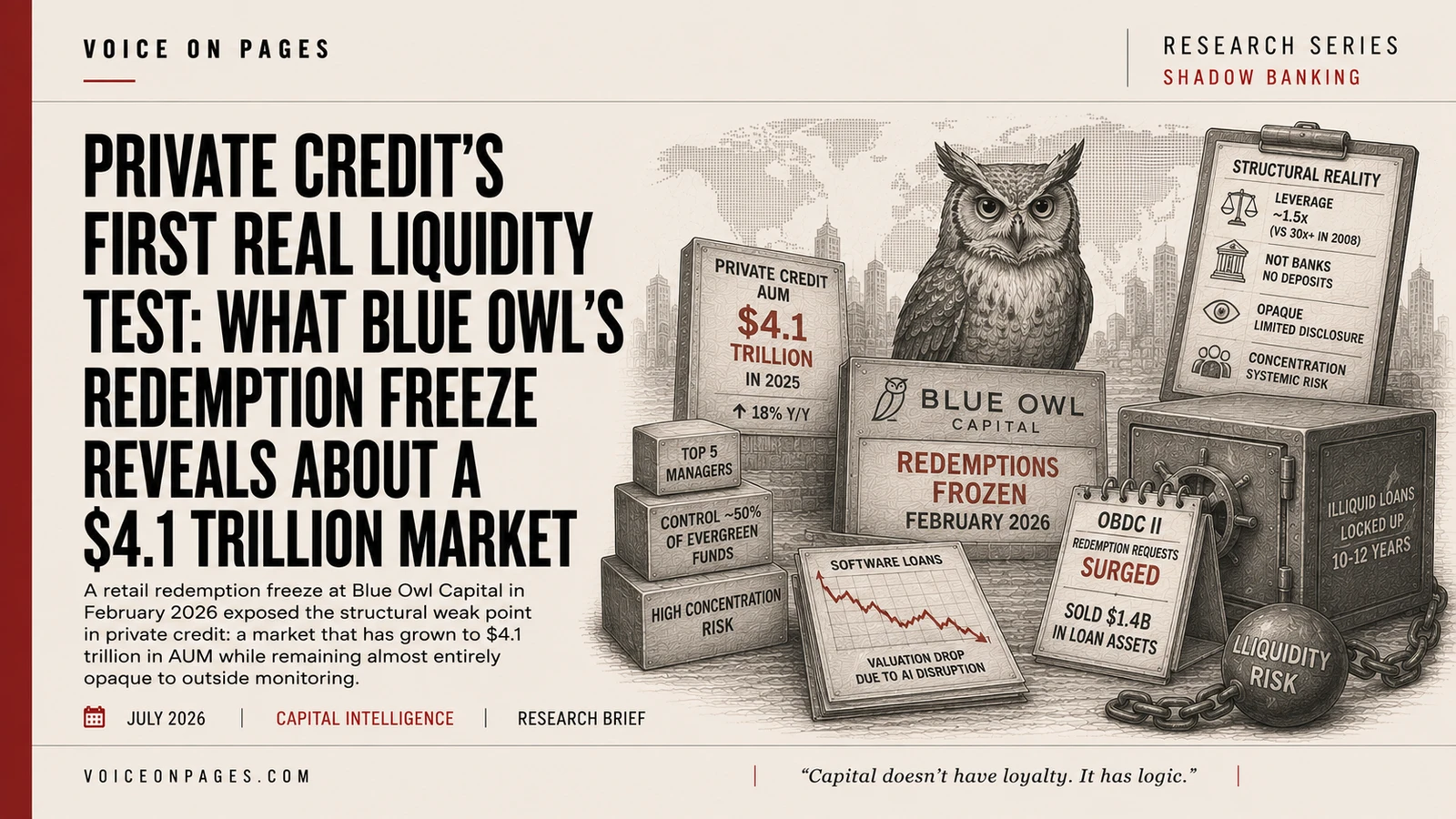
Private Credit's First Real Liquidity Test: What Blue Owl's Redemption Freeze Reveals About a $4.1 Trillion Market
A retail redemption freeze at Blue Owl Capital in February 2026 exposed the structural weak point in private credit: a market that has grown to $4.1 trillion in AUM while remaining almost entirely opaque to outside monitoring.
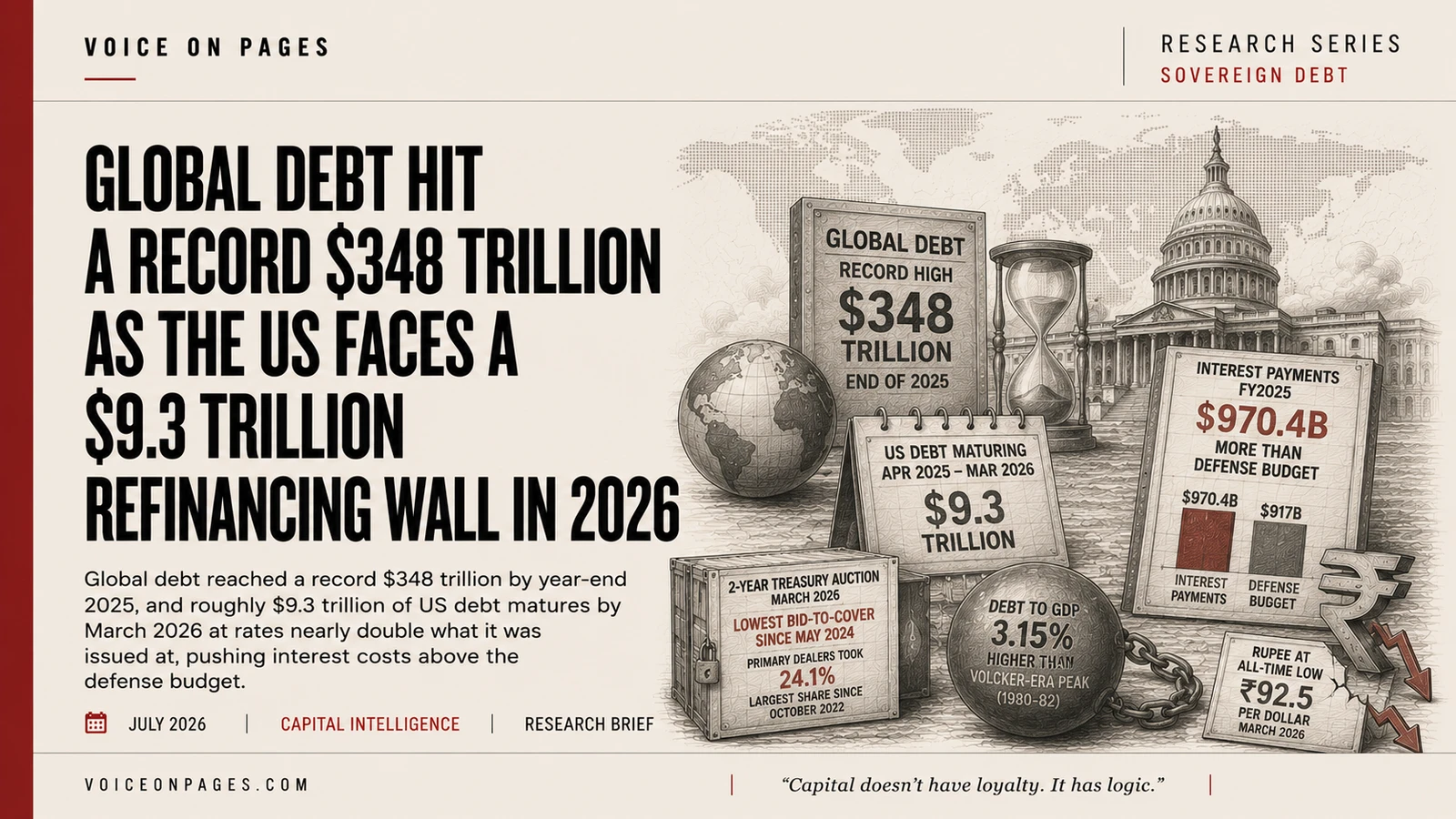
Global Debt Hit a Record $348 Trillion as the US Faces a $9.3 Trillion Refinancing Wall in 2026
Global debt reached a record $348 trillion by year-end 2025, and roughly $9.3 trillion of US debt matures by March 2026 at rates nearly double what it was issued at, pushing interest costs above the defense budget.
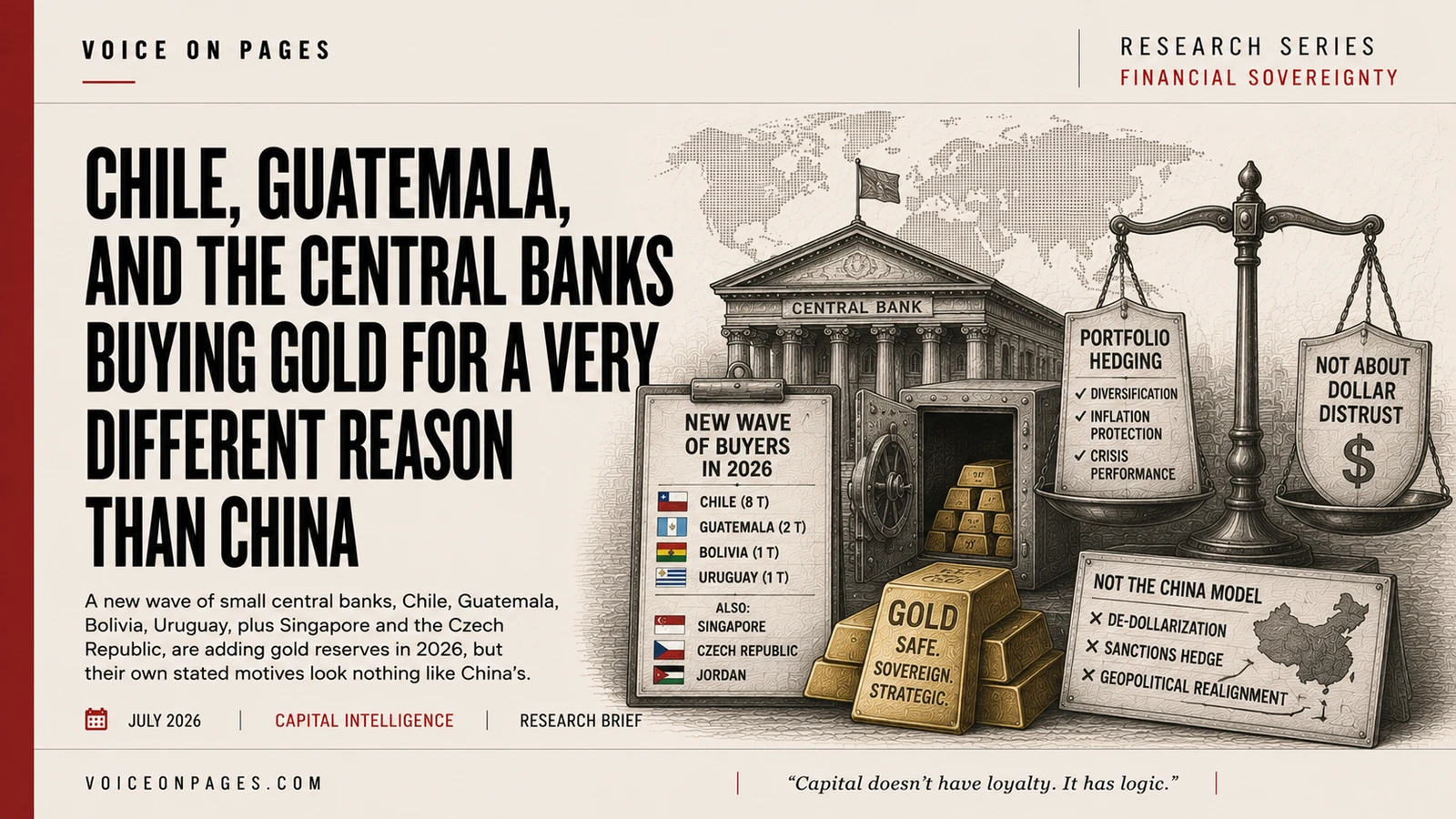
Chile, Guatemala, and the Central Banks Buying Gold for a Very Different Reason Than China
A new wave of small central banks, Chile, Guatemala, Bolivia, Uruguay, plus Singapore and the Czech Republic, are adding gold reserves in 2026, but their own stated motives look nothing like China's.
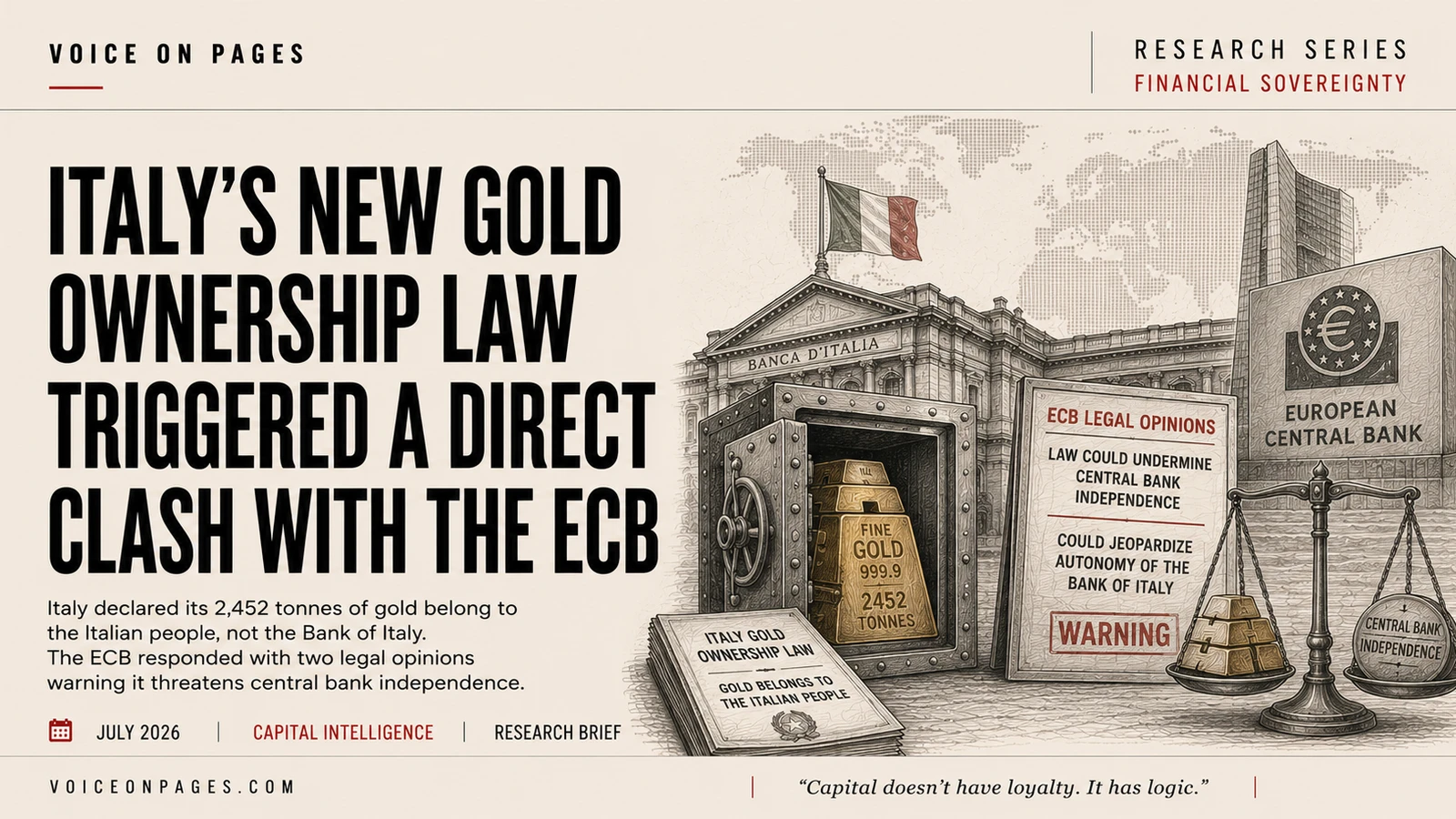
Italy's New Gold Ownership Law Triggered a Direct Clash With the ECB
Italy declared its 2,452 tonnes of gold belong to the Italian people, not the Bank of Italy. The ECB responded with two legal opinions warning it threatens central bank independence.
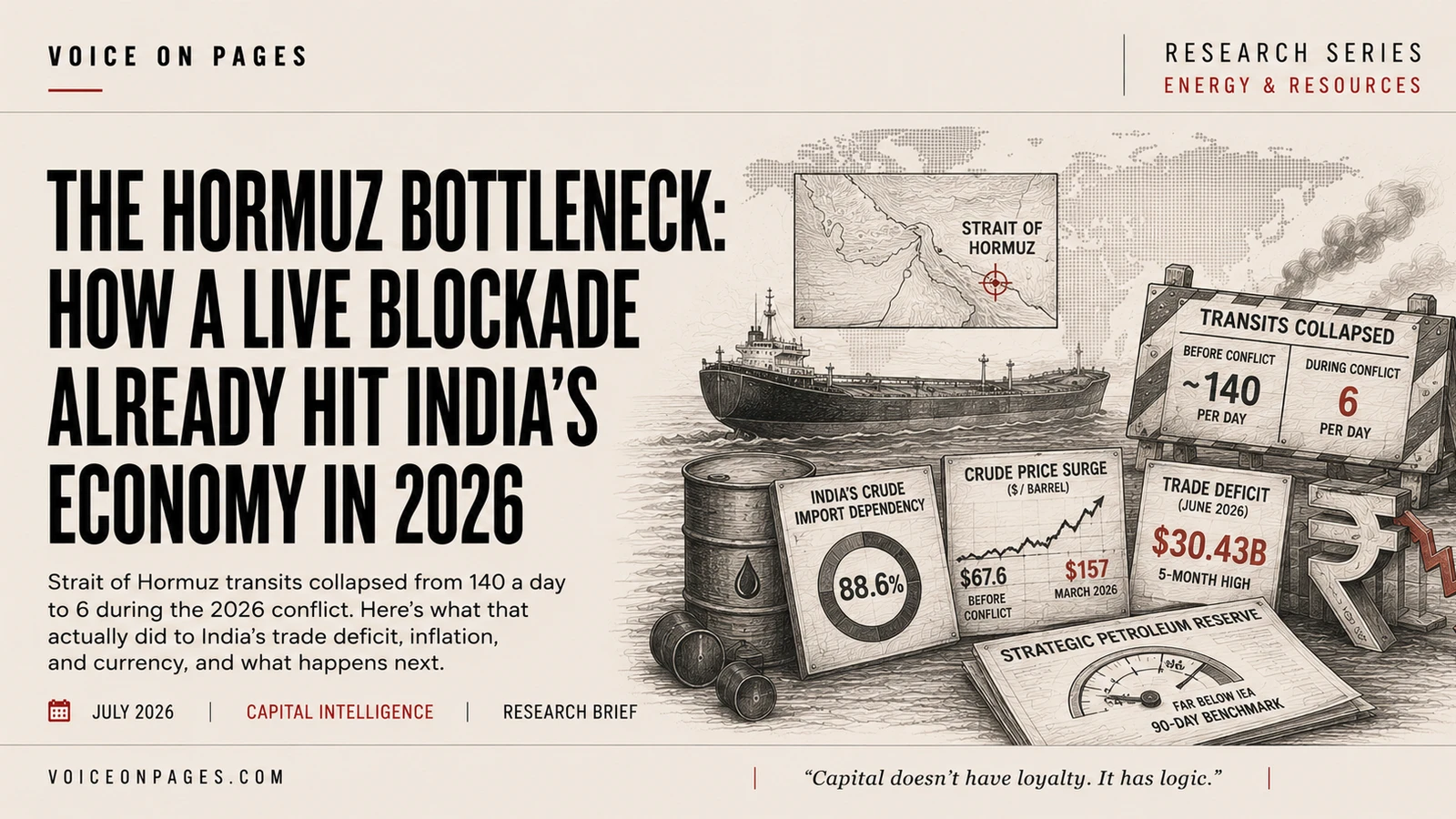
The Hormuz Bottleneck: How a Live Blockade Already Hit India's Economy in 2026
Strait of Hormuz transits collapsed from 140 a day to 6 during the 2026 conflict. Here's what that actually did to India's trade deficit, inflation, and currency, and what happens next.
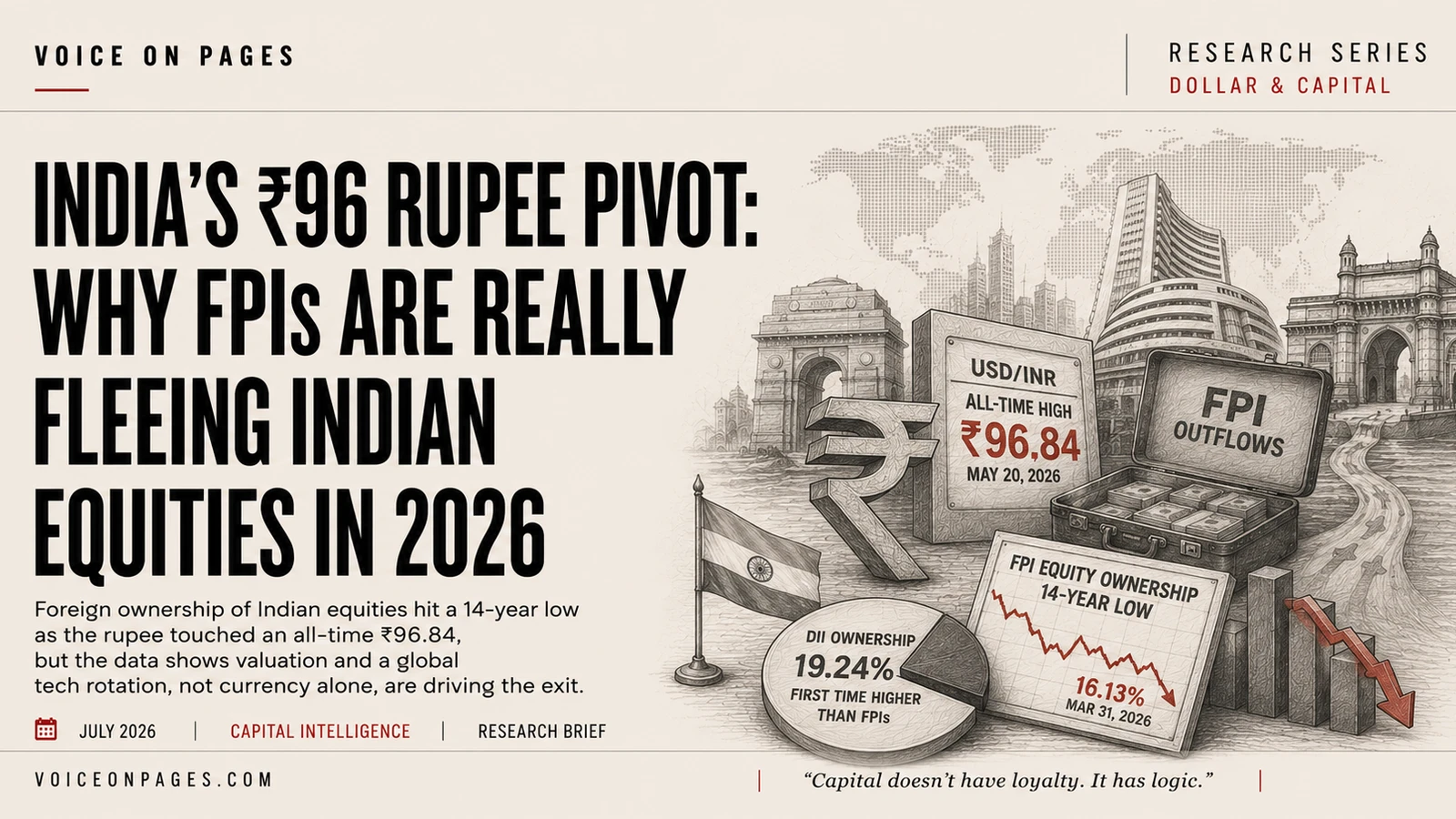
India's ₹96 Rupee Pivot: Why FPIs Are Really Fleeing Indian Equities in 2026
Foreign ownership of Indian equities hit a 14-year low as the rupee touched an all-time ₹96.84, but the data shows valuation and a global tech rotation, not currency alone, are driving the exit.
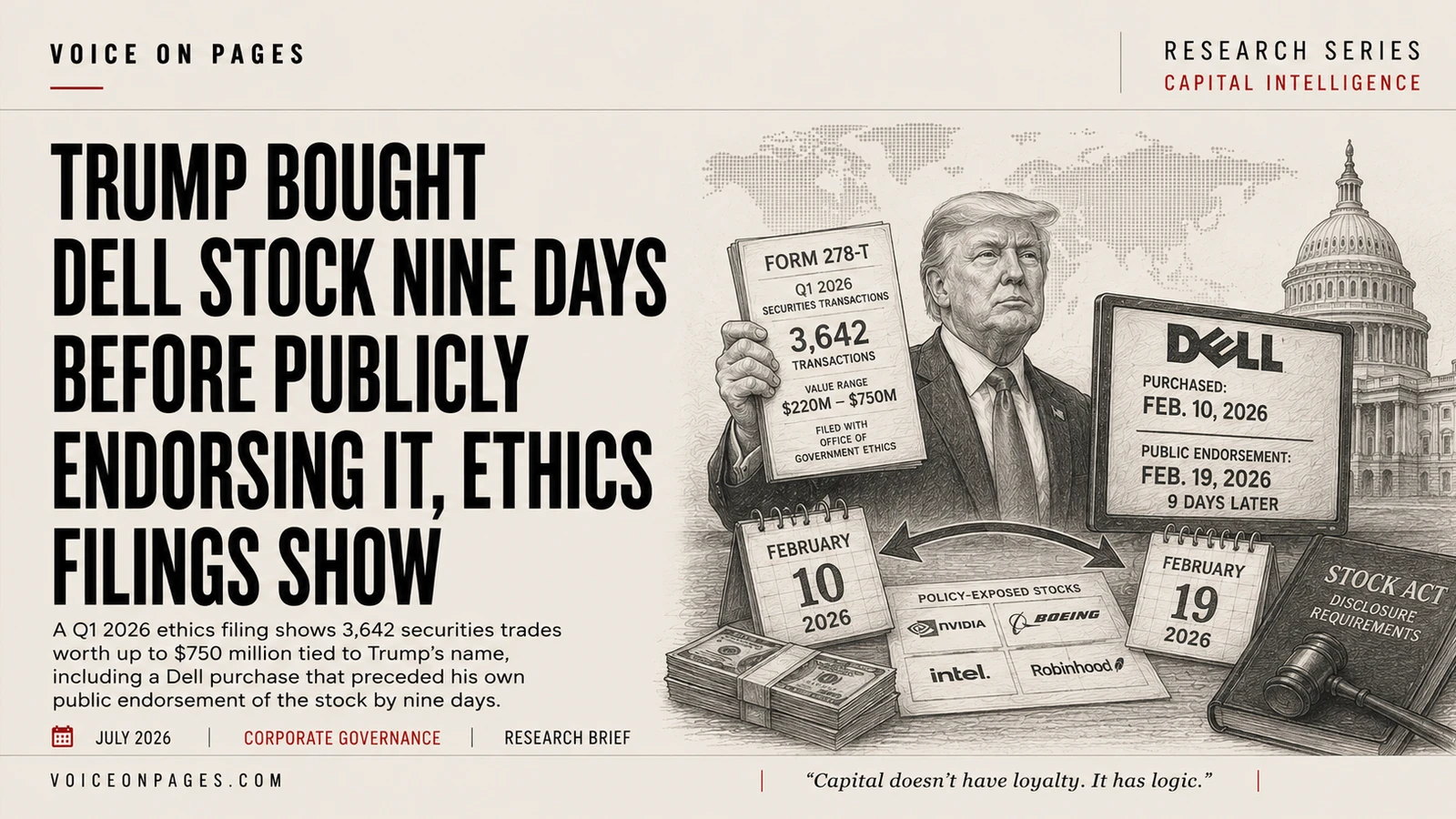
Trump Bought Dell Stock Nine Days Before Publicly Endorsing It, Ethics Filings Show
Trump bought $1-5M in Dell stock nine days before publicly endorsing it. Ethics filings also show Nvidia, Boeing, and Intel trades tied to policy decisions in the same window.
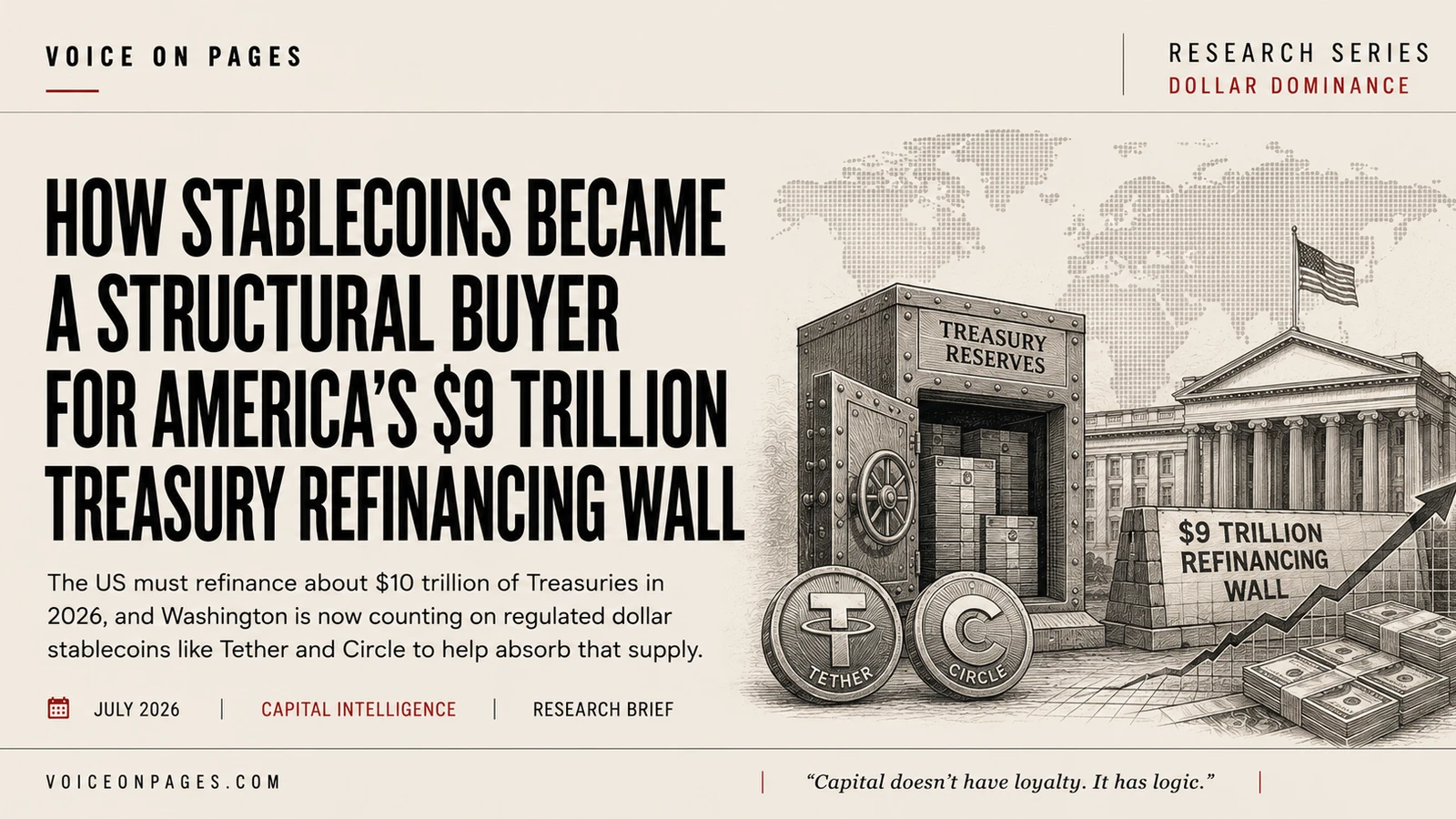
How Stablecoins Became a Structural Buyer for America's $9 Trillion Treasury Refinancing Wall
The US must refinance about $10 trillion of Treasuries in 2026, and Washington is now counting on regulated dollar stablecoins like Tether and Circle to help absorb that supply.
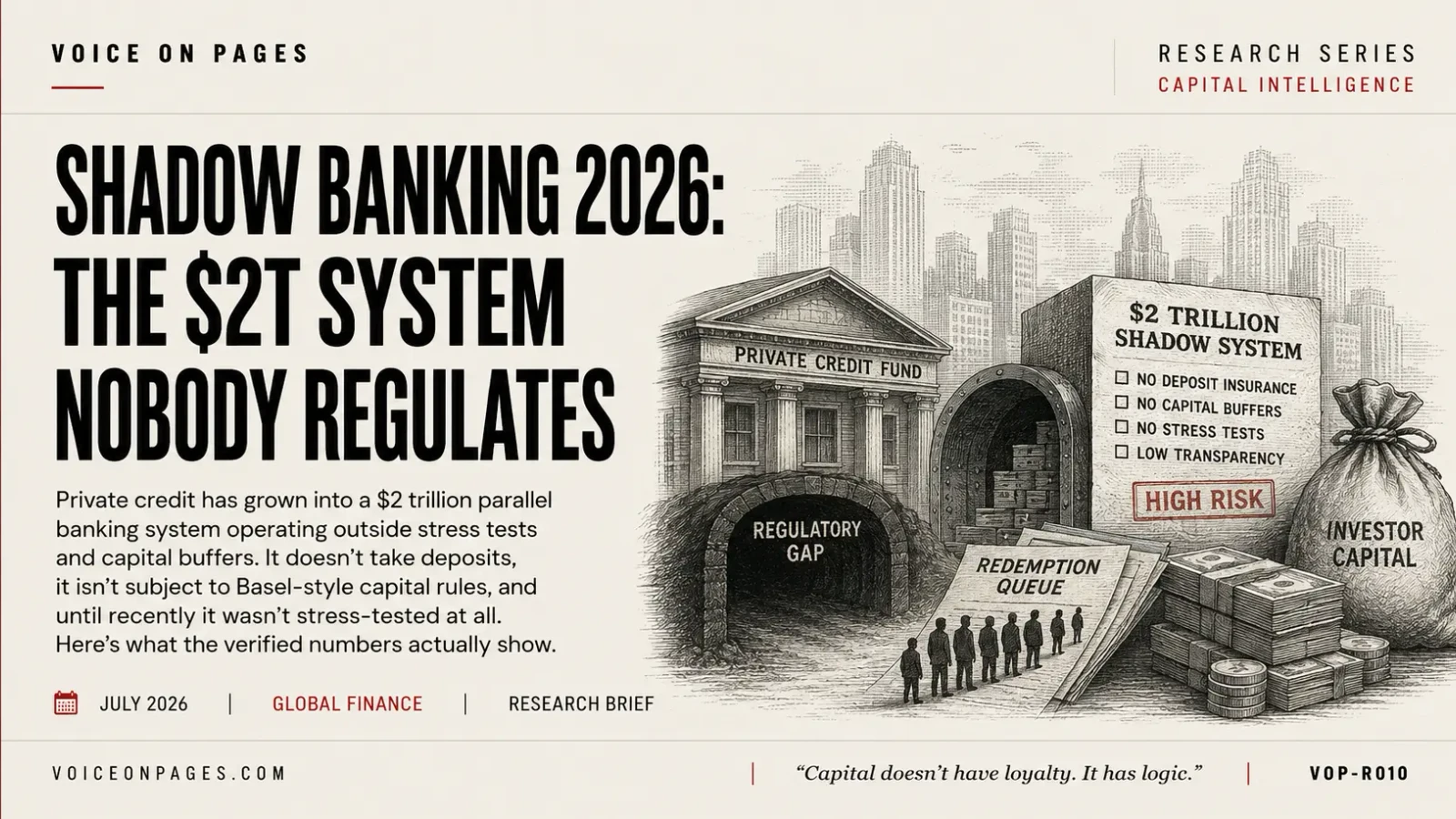
Shadow Banking 2026: The $2T System Nobody Regulates
The 2 trillion shadow banking system nobody regulates
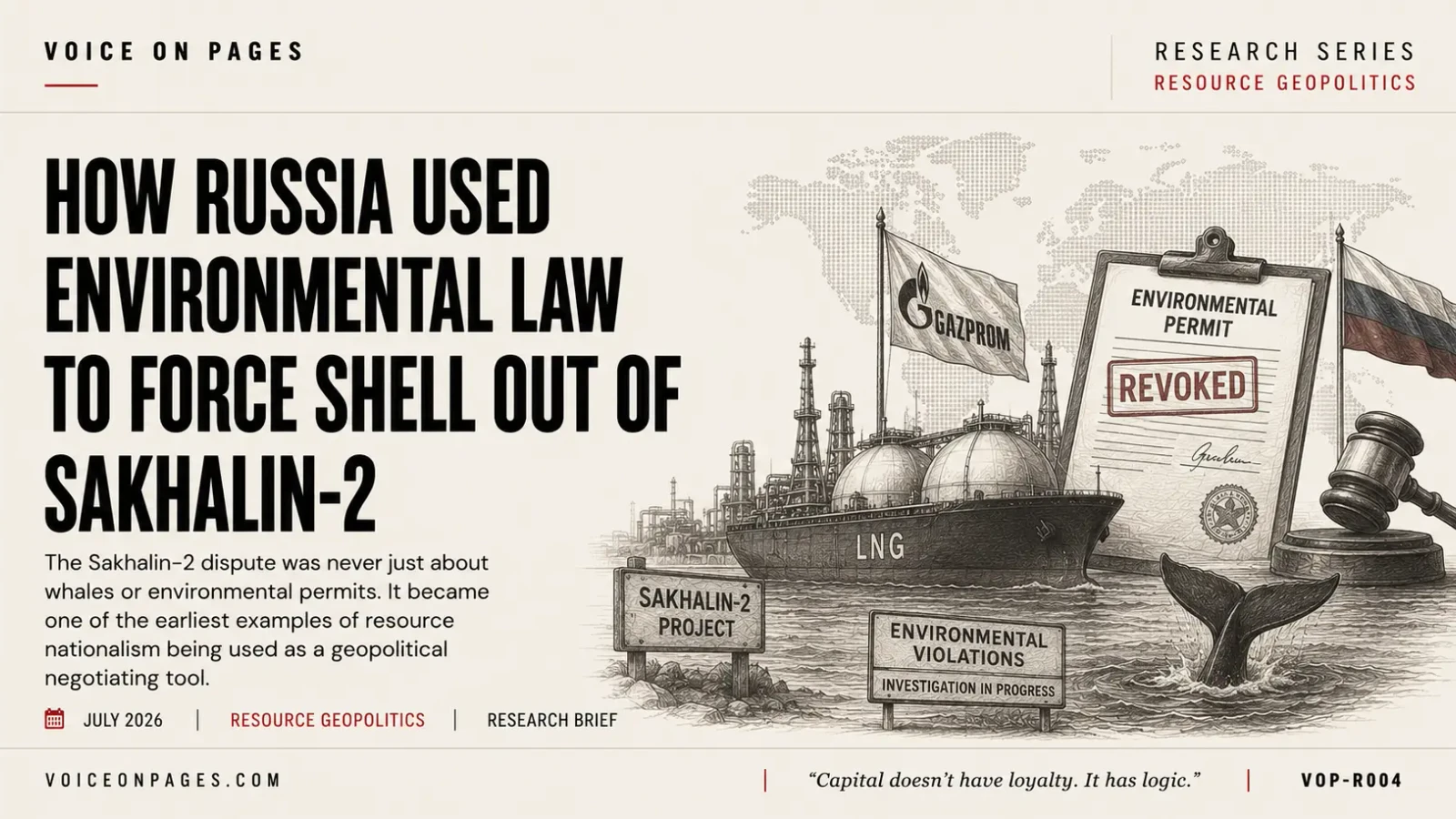
How Russia Used Environmental Law to Force Shell Out of Sakhalin-2
The Sakhalin-2 dispute was never just about whales or environmental permits. It became one of the earliest examples of resource nationalism being used as a geopolitical negotiating tool.
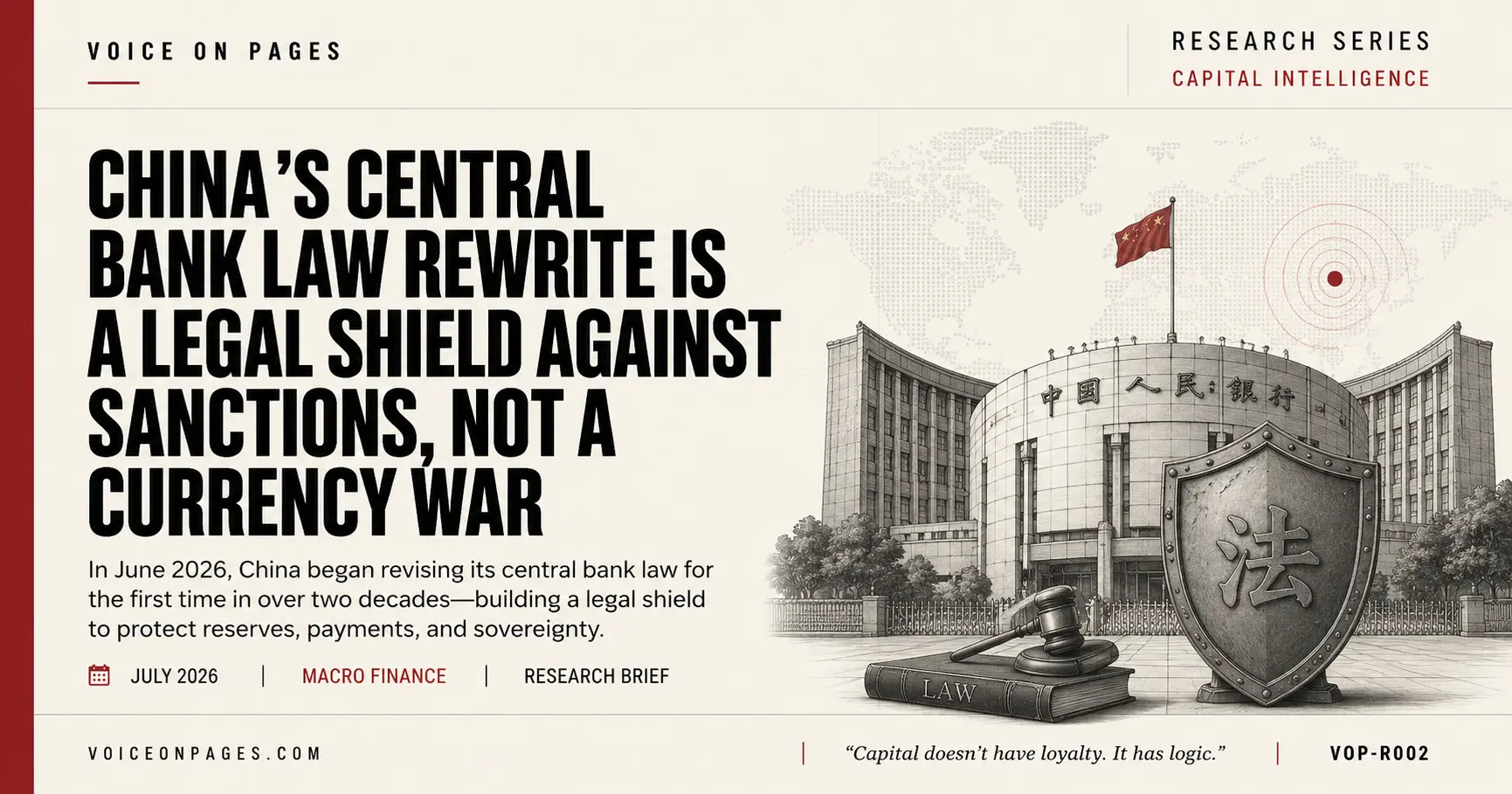
China's 2026 Central Bank Law Revision: How Beijing Is Building a Legal Shield Against U.S. Sanctions
In June 2026 China began rewriting the law governing its central bank to embed anti-sanctions powers, legalize the digital yuan, and block foreign sanctions enforcement inside its own borders.
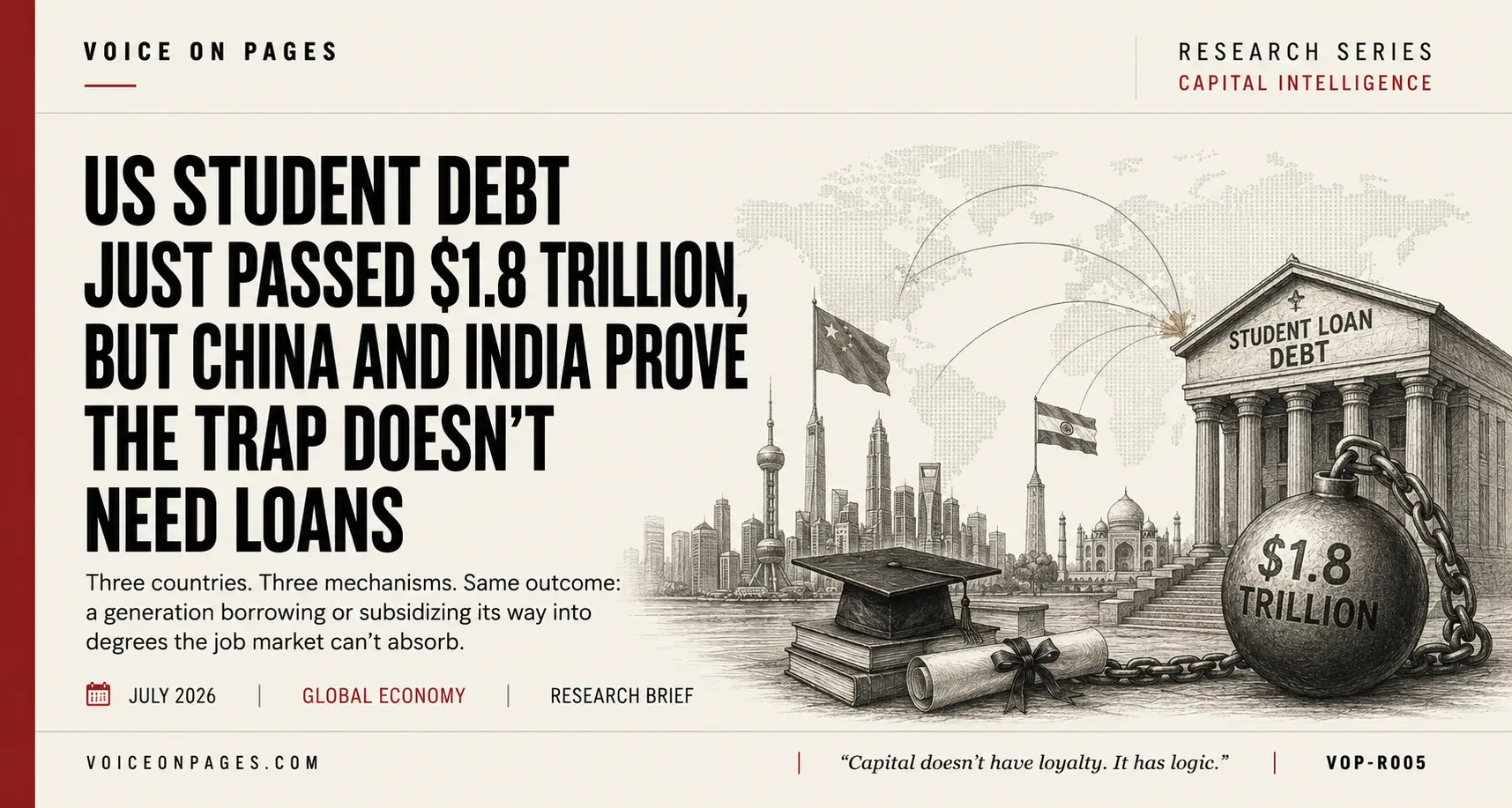
US Student Debt Just Passed $1.8 Trillion, But China and India Prove the Trap Doesn't Need Loans
America's student loan machine is bigger than the subprime mortgage bubble that triggered 2008. China built almost no student loans at all and still has a youth unemployment trap. India is racing to build the American version, faster than anywhere else in the world.

Portugal Just Became the First Eurozone Sovereign to Borrow in Yuan And It Was Cheaper Than Euros
Portugal's April 2026 offshore renminbi bond wasn't a political gesture - IGCP's own numbers show it was cheaper than borrowing in euros. Here's what that means for the yuan's future in European sovereign debt, and the opening it creates for India.

Why India Attracted $81 Billion in Foreign Investment While Global Capital Repositioned
India recorded $81.04 billion in foreign direct investment during FY2024–25, even as global investors diversified portfolios and supply chains. The shift reflects a long-term reallocation of capital rather than a simple flight from the United States.
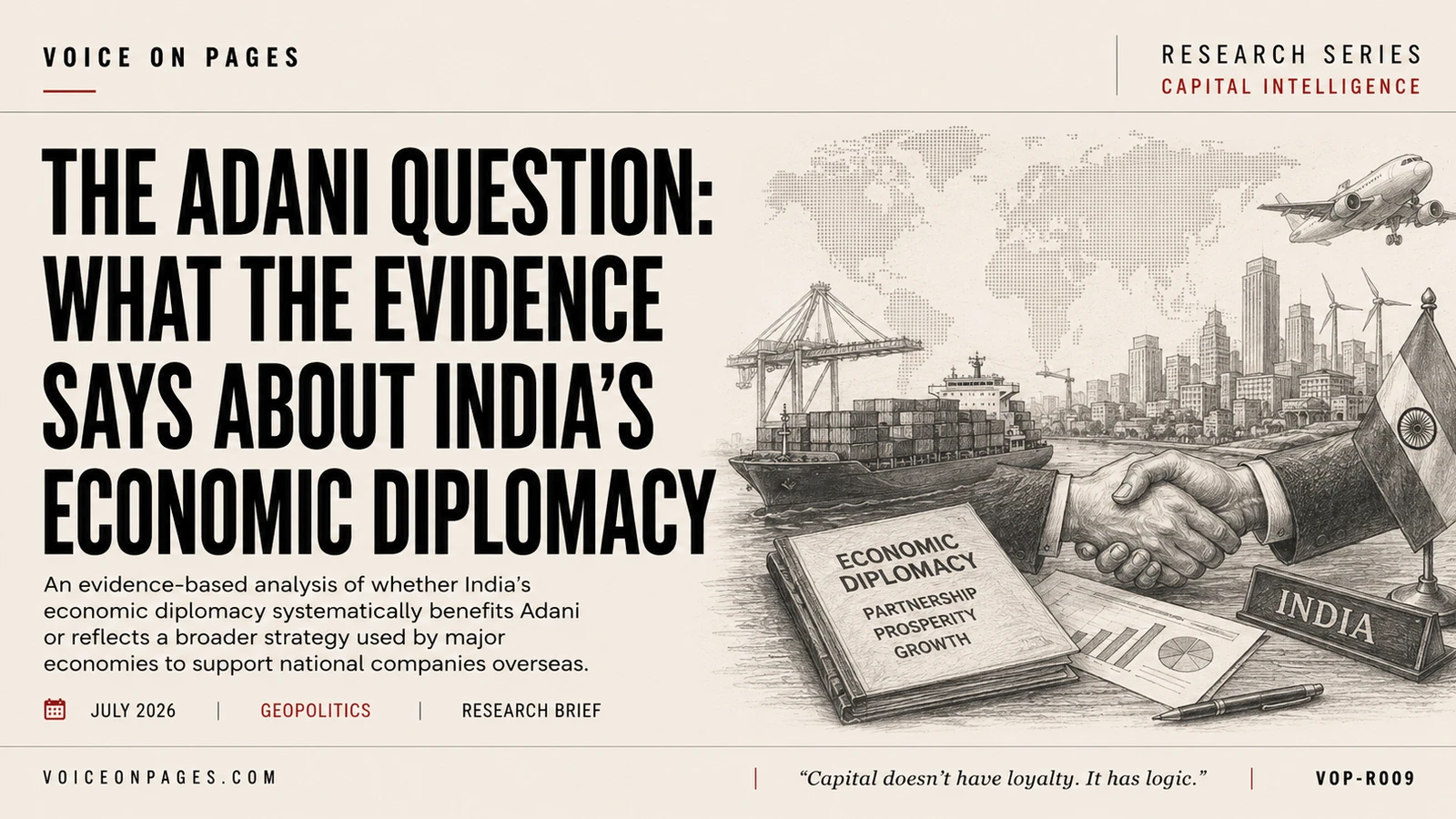
The Adani Question: What the Evidence Says About India's Economic Diplomacy
An evidence-based analysis of whether India's economic diplomacy systematically benefits Adani or reflects a broader strategy used by major economies to support national companies overseas.
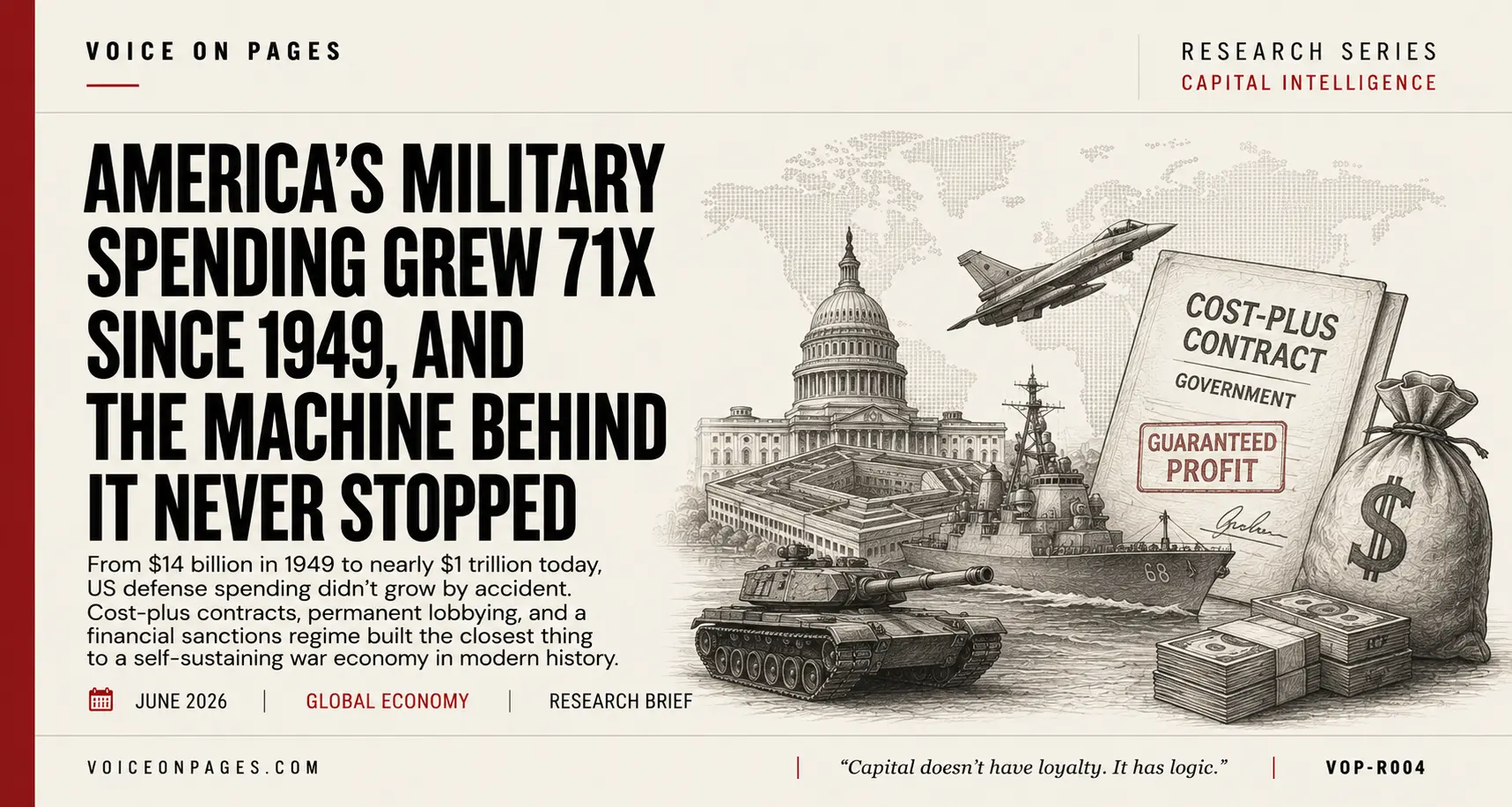
America's Military Spending Grew 71x Since 1949, and the Machine Behind It Never Stopped
From $14 billion in 1949 to nearly $1 trillion today, US defense spending didn't grow by accident. Cost-plus contracts, permanent lobbying, and a financial sanctions regime built the closest thing to a self-sustaining war economy in modern history.